
Concrete Scanning Before Drilling or Coring in Western BC
Drilling, coring, or cutting into concrete without scanning first is one of the most common — and costly — mistakes on construction and renovation projects. Embedded rebar, post-tension cables, electrical conduits, water lines, and voids are invisible from the surface. Striking any of them can cause project delays, safety incidents, structural damage, or liability claims.
Terraprobe provides professional ground penetrating radar (GPR) concrete scanning services across Western British Columbia to help contractors, engineers, and facility managers safely locate embedded objects before any penetration takes place. Our scanning process allows teams to proceed with confidence, knowing exactly what lies beneath the surface.
Why Concrete Must Be Scanned Before Drilling
Modern concrete structures are dense with embedded materials. These may include:
Reinforcing steel (rebar)
Post-tension cables
Electrical conduits
Plumbing and sprinkler piping
Fiber optic or data lines
Structural voids or delaminations
These elements cannot be identified visually. As-built drawings are frequently outdated or incomplete. Even minor drilling operations can intersect embedded materials unexpectedly.
Concrete scanning using GPR creates a real-time subsurface map, allowing drilling and coring to proceed safely, efficiently, and in compliance with project safety protocols.
What Ground Penetrating Radar Detects in Concrete
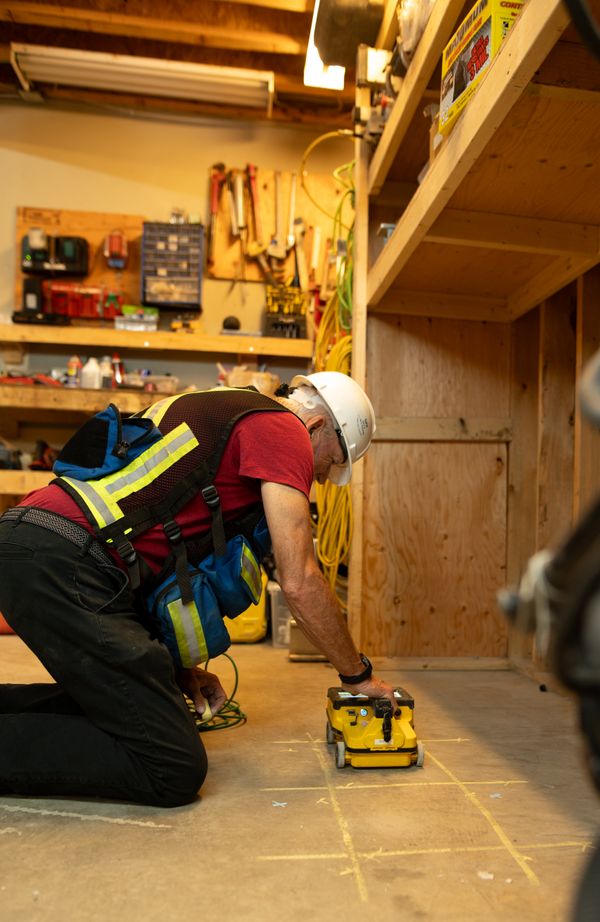
GPR transmits high-frequency radio waves into the slab and receives reflections from embedded materials. Using specialized antennas and software interpretation, Terraprobe technicians can locate:
Depth and layout of reinforcing steel
Post-tension cable paths
Electrical and communication conduits
Plumbing and hydronic tubing
Voids and honeycombing
Changes in slab thickness
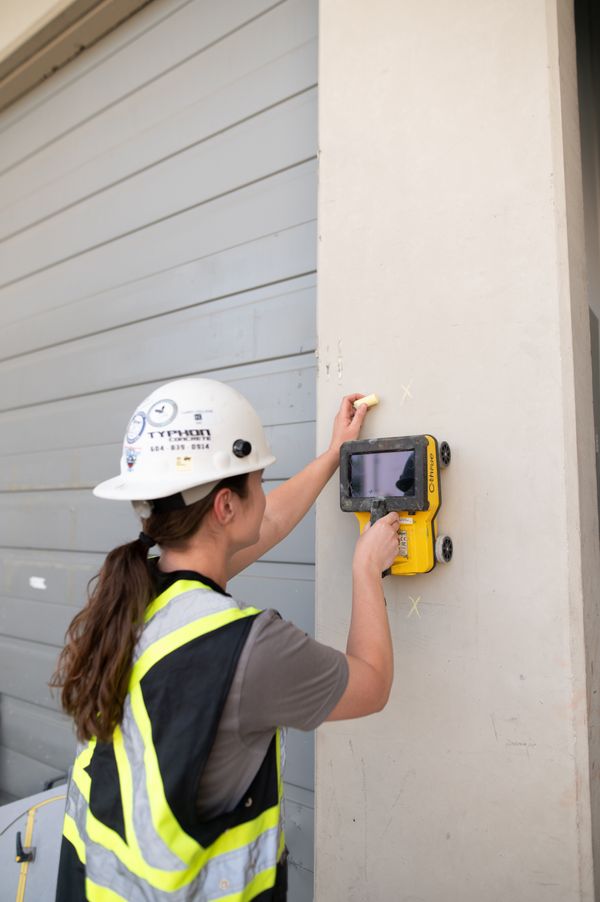
Results are marked directly on the surface in the field so cutting or drilling crews can work immediately.
What Happens If You Don’t Scan
Failure to scan before drilling can result in:
Cutting structural rebar or PT cables
Electrical shock hazards
Water or gas line strikes
Project shutdowns
Emergency repairs
Schedule delays
Insurance or liability exposure
Many commercial project specifications and safety programs now require scanning prior to concrete penetration. Proactive scanning is far less expensive than reactive repairs.
How Terraprobe Performs Concrete Scanning
Our concrete scanning process includes:
1. On-site surface preparation
2. Multi-directional GPR scanning passes
3. Real-time interpretation by trained technicians
4. Surface marking of detected objects
5. Depth estimates for each target
6. Digital reporting when required
Scanning can typically be completed same-day for most projects. We serve Vancouver, Victoria, Kelowna, Nanaimo, and surrounding regions throughout Western BC.
Typical Applications
Core drilling for mechanical and electrical installations
Saw cutting for renovations or demolition
Anchor bolt or dowel installation
Floor trenching
Retrofit piping or cabling
Structural modifications
Need to drill or cut concrete safely?
Terraprobe provides fast-response concrete scanning services across Western British Columbia.
FAQ
Do I need to scan concrete before drilling?
Yes. Concrete often contains embedded steel, conduits, or post-tension cables that cannot be seen. Scanning identifies these hazards before drilling begins.
Can GPR detect rebar and PT cables?
Yes. Ground penetrating radar reliably locates metallic and non-metallic embedded materials and estimates their depth.
How long does concrete scanning take?
Most scanning projects can be completed the same day, depending on slab size and complexity.
What areas does Terraprobe serve?
Terraprobe provides concrete scanning services across Western British Columbia, including Vancouver, Victoria, Kelowna, and Nanaimo.